
Mountain Transfer
Private Car Service from Denver Airport (DEN) to Vail
Private, door-to-door transfers from DEN to Vail in luxury SUVs and vans. Estimated rates from $750 one-way.
DEN to Vail private car service at a glance
Arion provides private, door-to-door car service from Denver International Airport to Vail. One vehicle, your party only, from the DEN curb to your hotel or residence in Vail Village, Lionshead, East Vail or West Vail. The drive is 121 road miles, about two to two and a half hours in clear conditions on I-70, longer in winter weather or weekend traffic. Estimated one-way base rates start at $750 for an Executive SUV (up to 5 passengers), plus tax and fees; a free quote confirms your exact rate. Flights are tracked, and our chauffeurs drive I-70 in every season in winter-equipped vehicles.
| Option | Who rides | Timing | Drop-off / driving | Cost |
|---|---|---|---|---|
| Arion private car | Your party only | Leaves when you land | Professional I-70 chauffeur | Est. from $750 per vehicle |
| Shared shuttle | Shared with other riders | Fixed departure times, multiple stops | Driver provided | Per seat; cheaper for solo travelers |
| Uber / Lyft | Your party only | On demand in Denver; mountain trips not guaranteed | Depends on the driver | Metered, varies with demand |
| Rental car | Your party only | Your schedule | You drive I-70 yourself | Daily rate plus fuel and parking |
Arion is a women-owned, Colorado PUC-licensed (LL-04689) chauffeured car service. Since opening in October 2025 we have completed 3,314 transfers with zero accidents, and 68% of our reservations come from returning clients.
DEN to Vail Estimated Rates — Vehicles, Capacity & Luggage
Estimated rates: the figures below are estimated one-way DEN–Vail base rates. Actual rates vary with your exact pickup and drop-off. 9.3% sales tax, 4% credit-card processing and, where applicable, a 12% fuel surcharge (waived on all-electric Luxury Sedan trips) are added at booking. Gratuity is never automatically added or assumed; 20% is customary. Your quoted rate is normally at or below the estimate shown — a free quote confirms it in minutes.
What happens when the pass closes
If Vail Pass or the Eisenhower Tunnel shuts while you are in the air, we do not cancel your ride — dispatch reroutes or holds and tells you the new arrival window. Our powder days and road closures guide explains the calls we make, and Colorado Traction Law compliance is standard on every vehicle we send up I-70, not an upgrade. Skis and boards travel per our ski and snowboard gear guidance; car seats are $25 each and boosters $15.
Denver International Airport to Vail is 121 road miles and about two to two and a half hours in clear conditions, longer in winter weather or I-70 weekend traffic. Arion prices this route per trip with luxury SUVs and vans for groups and ski equipment. Chauffeurs run traction-law-compliant vehicles and monitor closures between Georgetown and Vail Pass.
Where We Drop You
Which exit, and why it matters with luggage
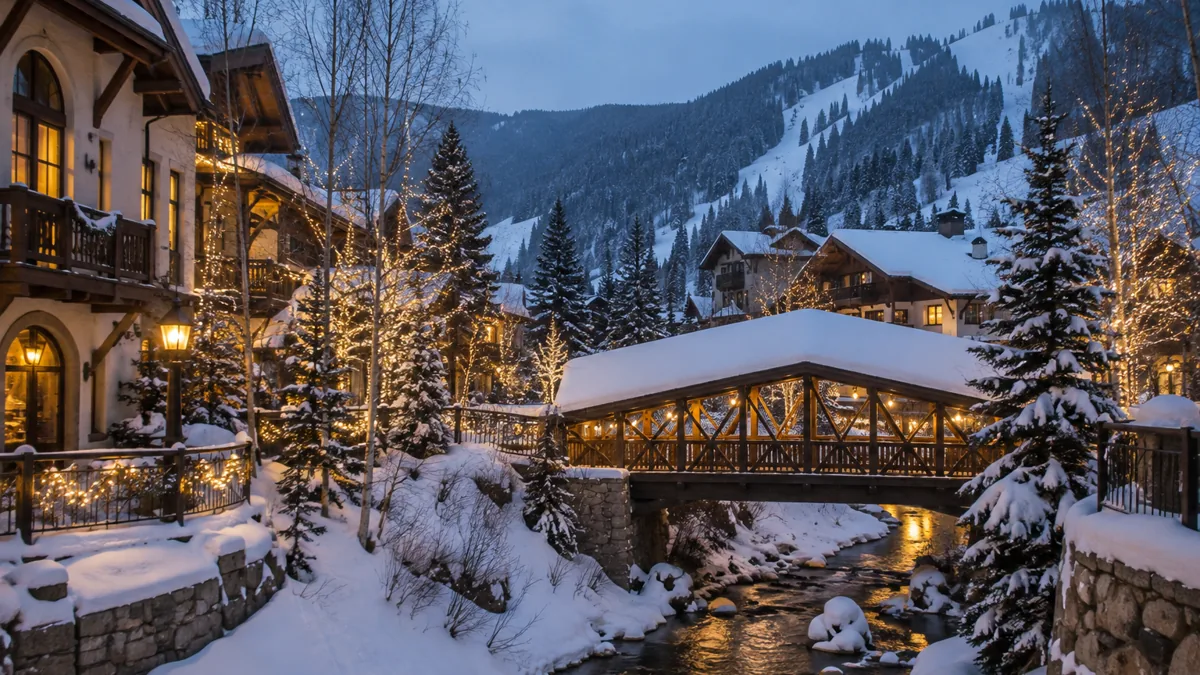
Vail reads as one village on a map and works as six separate ones on the ground, and the difference decides your exit. Give dispatch the lodging name rather than “Vail” and your chauffeur takes exit 176 for Vail Village and Golden Peak, 173 for Lionshead and Cascade, or 171 for West Vail. Through-traffic in the pedestrian core is limited, so the wrong side of the village costs you twenty minutes with bags in your hands.
Which of those neighborhoods you should actually book — the beds, the walk to a lift, where the reasonably priced dinner is — is laid out on our Vail town guide. Once you are here the town bus is free and runs year round, so most guests never need a car during the stay. Only at the two ends of the trip, which is the part we handle.
Why Arion
Why choose Arion for this route.
Ice-Driving Trained
Every chauffeur completes annual ice driving certification. We carry chains, know when to use them, and we've driven this road in every condition.
AWD/4WD Fleet
Our SUVs and Sprinters are equipped for mountain conditions — all-wheel drive, winter tires, commercial insurance rated for mountain passes.
I-70 Timing
We know when the tunnel backs up, when to leave to avoid ski traffic, and which rest stops aren't worth the delay.
$5M Liability Coverage
Mountain driving demands higher standards. We carry full general liability coverage — five times the state minimum.
The Drive
What the drive actually looks like, mile by mile
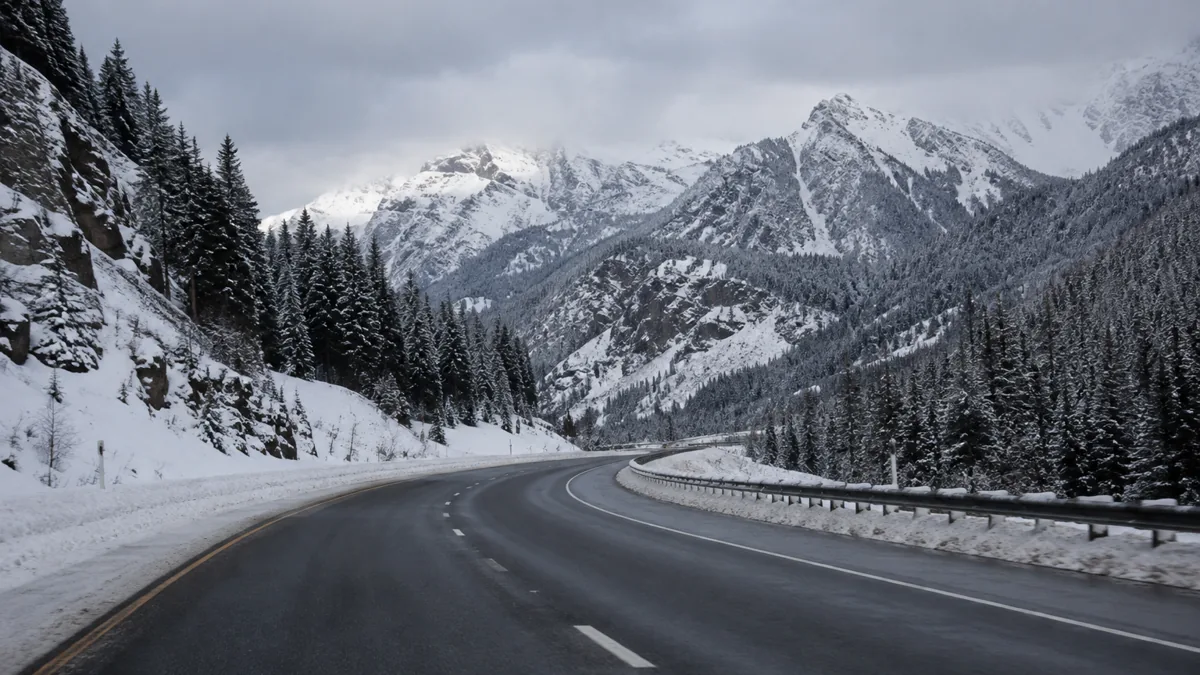
The route is I-70 west the whole way, and it changes character four times. The first 25 miles out of the airport are flat highway through the north metro. From C-470 to Idaho Springs you climb steadily through Floyd Hill, where the reconstruction project has shifted lanes and speeds for the last several seasons. Above Idaho Springs you are in the canyon: Georgetown, then the eight-mile climb to the Eisenhower Tunnel at 11,158 feet, the high point of the entire Interstate Highway System. West of the tunnel comes the descent to Silverthorne and the second climb over Vail Pass at 10,662 feet, then the drop through East Vail into the village. Most people underestimate the last two segments. Vail Pass is where conditions turn first and where closures start.
Exit 176 is Vail Village and Golden Peak. Exit 173 is Lionshead and Cascade Village. Exit 171 puts you at West Vail and the Sandstone neighborhood. Telling your chauffeur which of those you actually need saves real time in a village where through-traffic is limited and some lodging is accessible only from one side.
How much time to add in winter, honestly
In dry conditions the transfer runs about three hours door to door. During an active storm, plan four. On a Sunday afternoon in February, when the entire Front Range drives home at once, eastbound I-70 between Frisco and Idaho Springs can add ninety minutes on its own. Our dispatch builds departure times backwards from your flight using CDOT's current conditions rather than a fixed rule, and we will tell you plainly when a departure time you asked for is too tight.
Two things break schedules on this route more than snowfall: a crash inside the Eisenhower Tunnel, which stops both bores with no detour except the Loveland Pass climb that is closed to some vehicles, and a Code 15 traction enforcement checkpoint that turns non-compliant vehicles around at Dotsero or Morrison. Neither is predictable. Both are survivable if your driver is watching for them before you leave.
Which vehicle fits a ski group
Ski luggage is the constraint, not passenger count. A party of four with four ski bags and four boot bags does not fit comfortably in a vehicle rated for five passengers. As a rule of thumb, subtract one seat per two hard ski cases. Groups of six travelling with equipment are usually better served by a coach van than by two SUVs, and a single van keeps the group together when the highway slows down. Capacities and hourly rates for every vehicle are published on our fleet page; for a Vail transfer we quote the trip rather than the clock.
Conditions, By The People Who Drive It
The weather, told straight
February is the snowiest month in the town of Vail, about 35 inches on the 1991–2020 average, followed by March at roughly 28 and April at 21. That surprises people who assume January owns the season. Midwinter snow here is light and dry; spring snow is heavy and wet, which is better for the snowpack and harder on the road.
What that means for your transfer: the storms that close Vail Pass are as likely in March as in January, and a bluebird morning in Denver tells you nothing about what is happening at 10,662 feet. Our dispatch works from CDOT conditions rather than the forecast on your phone, and a spring trip gets the same buffer a January one does.
Planning Resources
- I-70 winter travel guide: traffic windows and closures
- Colorado's traction law explained for travelers
- DEN delays and winter weather: what happens to your ride
- DEN & I-70 live conditions (updated every 5 minutes)
- Colorado mountain transportation hub
- Meeting your chauffeur at DEN
- Should you fly into EGE instead?
Frequently Asked Questions
How long from DIA to Vail?
2–3 hours in normal conditions. Friday afternoon ski traffic can push it to 3.5–4 hours. We adjust departure times to minimize delays.
Is it safe to drive to Vail in winter?
With the right vehicle, driver, and preparation — yes. Our chauffeurs are ice-driving trained, carry chains, and drive AWD/4WD vehicles with winter tires.
Do you serve Beaver Creek and Lionshead?
Yes. All Vail Valley locations — Vail Village, Lionshead, Beaver Creek, Avon, Edwards, Minturn. Door-to-door.
Private car vs. shuttle to Vail?
Shuttles make multiple stops and run on fixed schedules. A private transfer is direct, on your schedule, at your destination. For 2+ travelers, the per-person cost is often comparable.
Where does my chauffeur meet me at Denver International Airport?
For commercial arrivals your chauffeur meets you curbside on Level 5 — Island 2, near door 506 on the west side or door 511 on the east, depending on your baggage claim — and texts you the exact spot before you land. An inside meet-and-greet with a name sign is available for an additional $75, arranged at booking. Private-aviation clients are met planeside or in the FBO lobby.
What happens if my flight into DEN is delayed?
We track every flight in real time and shift your pickup automatically — no phone calls, no rebooking, and no delay charge. Airport arrivals include a 30-minute complimentary wait window from actual landing time.
How early should my departure pickup be for a flight out of DEN?
As a rule: 3 hours before departure for international, 2.5 hours for domestic during peak morning and Sunday-afternoon security waves, and 2 hours off-peak — plus your drive time. Dispatch builds the pickup time backward from your flight and the current DEN wait times.
Can Arion handle late-night or red-eye airport pickups?
Yes. Arion dispatches 24/7, including post-midnight arrivals and 3 a.m. departures. Late-night trips are pre-assigned to a specific chauffeur, so there is no scramble for a driver when you land.
Do you serve Centennial, Rocky Mountain Metro, and private FBOs?
Yes. Arion regularly covers Centennial (APA), Rocky Mountain Metropolitan (BJC), Eagle County (EGE), Aspen/Pitkin (ASE), and Colorado Springs (COS), and meets private-aviation passengers planeside where the FBO permits.
Is it safe to drive into the mountains in winter?
With the right vehicle and a trained chauffeur, yes. Colorado's Traction Law (Code 15) on I-70 requires AWD/4WD or snow-rated tires with adequate tread; Arion vehicles meet or exceed it, carry chains, and our chauffeurs are ice-driving trained and monitor CDOT conditions before and during every mountain run.
What happens if I-70 closes or chain law is in effect?
Dispatch monitors CDOT closures and traction/chain restrictions in real time and will reroute (US-285, US-40, I-70 timing changes) or reschedule your pickup window. We tell you early rather than leaving you guessing at the airport.
How much extra time should I plan for ski-day traffic?
Plan an extra 60–90 minutes for Friday and Saturday westbound mornings and Sunday afternoon eastbound returns, and more around holiday weekends and storm cycles. We shift departure times to travel ahead of the peak rather than sitting in it.

How much luggage fits?
An Executive SUV holds 8 standard bags or 4 ski sets, and a Luxury SUV holds 5 bags because the captain's chairs take up cargo room. Our vans hold 14 bags or 6 ski sets, and a Luxury Sedan holds 3 bags. If you are travelling with skis, boards, golf clubs or oversized gear, tell us at booking and we will size the vehicle to the pile, not the headcount.
Will my chauffeur meet me inside at the airport?
At Denver International, curbside pickup on Level 5 is standard. Your chauffeur texts you the exact door before you land and is waiting when you walk out. If you would rather be met inside at baggage claim with a name sign, that is available for an additional $75, arranged at booking. At Eagle County and Aspen, the inside meet is standard: your chauffeur meets you in the terminal and walks you to the vehicle.
What happens if Colorado's traction law is in effect?
Nothing changes for you. Our vehicles meet Colorado's traction law requirements as they sit, so there is no swap, no surcharge and no scramble the morning of your trip. On vans and buses your chauffeur may pull over to fit chains when conditions call for it. It takes a few minutes, and it is the reason the trip keeps moving while other vehicles are turned around at the checkpoint.
How early do we leave the mountains for a flight home?
In winter we add two hours to the normal drive time. Not because the road is usually bad, but because the one morning it is should not be the morning you miss a flight. For a noon departure out of DEN that means leaving Vail around 7:00 a.m. Your chauffeur confirms the pickup time the day before, once we have seen the forecast and the pass conditions.
Last reviewed: October 1, 2026 by Arion dispatch. Rates, policies, travel times and Colorado Department of Transportation rules are subject to change; call (970) 703-4995 for current details.
Sources
Regulations, figures, and schedules on this page come from the operators and agencies that publish them. Check them yourself:
- Colorado DOT — I-70 Mountain Corridor
- Vail Mountain — mountain statistics (acreage, elevation, average snowfall)
- Vail Daily / NCEI — monthly snowfall averages for the town of Vail
- Federal Register — Camp Hale–Continental Divide National Monument proclamation
- Colorado Snowsports Museum — history of Vail Mountain
- Denver International Airport — Passenger Pickup locations
Book your Vail transfer in minutes.
Because You Matter. And your ride should prove it.