Quick Answer: The Georgetown Loop Railroad is a narrow-gauge train 45 miles west of Denver that crosses a 95-foot-high bridge and connects to the Lebanon Silver Mine, tunnels bored in the 1870s where you can still see dragon's blood seeping from the walls and original Widowmaker drills mounted in place. Plan about 2.5 hours. Bring a jacket, it's 44°F inside the mountain, every day of the year.
The horn hits first.
You hear it before the train moves, a long, low blast that bounces off the canyon walls and rolls up through the pines above Georgetown. Then the locomotive lurches forward, the narrow-gauge wheels catch the rail, and you're climbing west into Leavenworth Mountain at about walking speed.
That's how this story starts. Not in the 1870s. Not with the silver rush. It starts with a sound that hasn't changed in 140 years, echoing through the same canyon, off the same rock, above the same creek that nearly killed the engineers who tried to build a bridge over it.
A Railroad Built Backwards
Georgetown and Silver Plume sit two miles apart, but Silver Plume is 640 feet higher up the canyon. A straight track would've required a grade too steep for any locomotive of the era. So in 1879, Union Pacific chief engineer Jacob Blickensderfer designed something crazy: a corkscrew. The track would travel 4.5 miles to cover that 2-mile distance, looping over itself through hairpin turns and four bridges across Clear Creek.
The centerpiece was Devil's Gate High Bridge — 300 feet long, standing 95 feet above the creek, supported by iron towers anchored into granite. When the bridge was finally finished in late 1883, someone noticed a problem. The entire structure had been installed backwards — north supports on the south end. They tore the whole thing apart and rebuilt it through the dead of a Colorado winter. It was done on February 28, 1884.
The original plan was to push the rail over Loveland Pass to the boomtown of Leadville. That never happened. The Union Pacific found an easier route through South Park, and Georgetown's railroad became a railroad to nowhere — the line dead-ended four miles past Silver Plume at Bakerville. But the Loop itself became one of Colorado's first tourist attractions. At its peak, seven trains a day ran from Denver. A round-trip ticket cost three dollars.
Into the Mountain
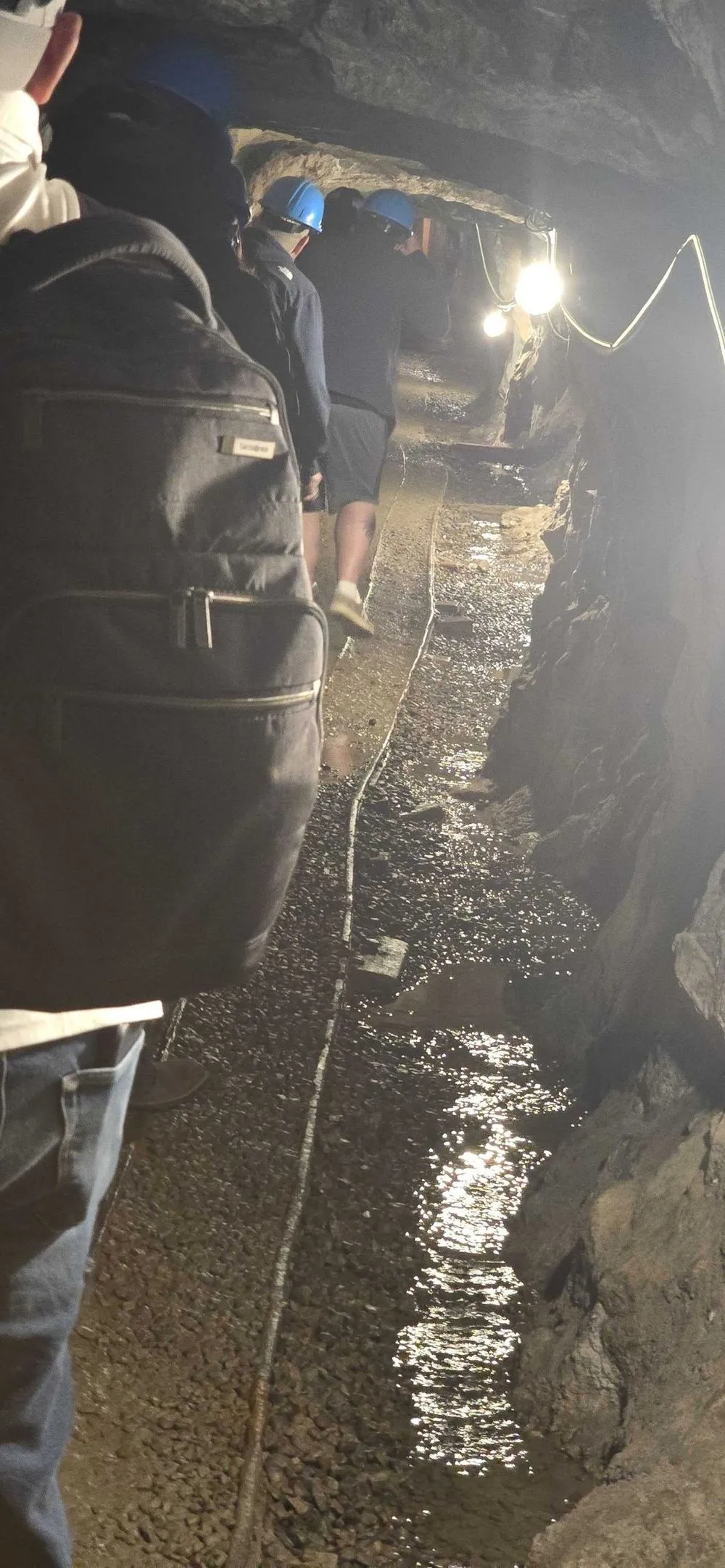
Halfway through the train ride, you stop. Not at a station, at a mountain. The Lebanon Mine sits cut into the flank of Leavenworth Mountain, bored in the 1870s when Georgetown was the Silver Queen of the Rockies and Cornish immigrants made up sixty percent of the mining workforce.
They handed me a hard hat at the entrance. Ten steps in, I understood why. The ceiling drops fast. The temperature drops faster — from 80-degree June sunshine to a flat, constant 44°F that doesn't change whether it's July or January.
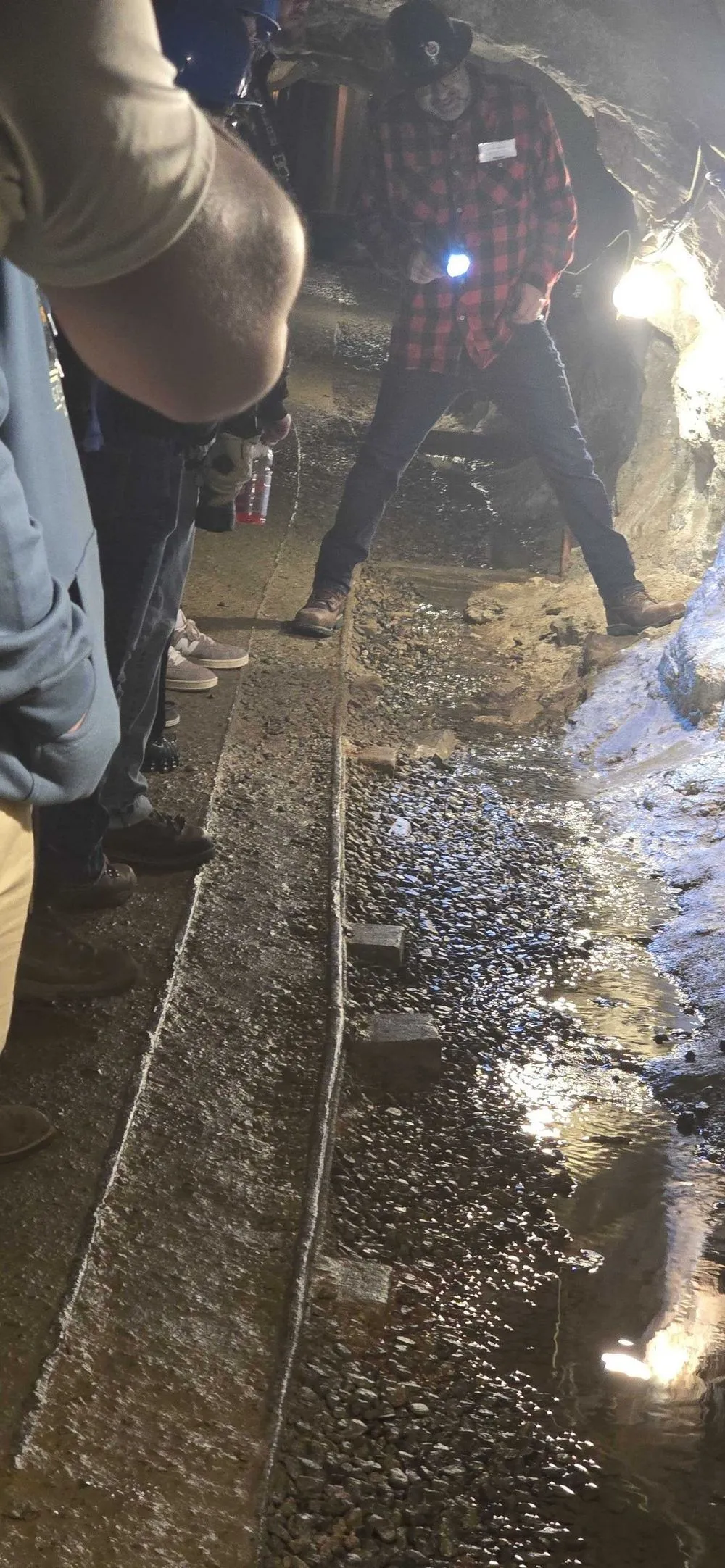
The floor is uneven, wet, and lined with original mine cart tracks, iron rails set into rock 150 years ago, still holding their gauge. Water pools between the ties. The air smells like cold stone and iron. The standard tour takes you 500 feet in. The extended tour goes over 1,000 feet, following the Hise Ore body deep into the mountain.
Following the Dragon's Blood
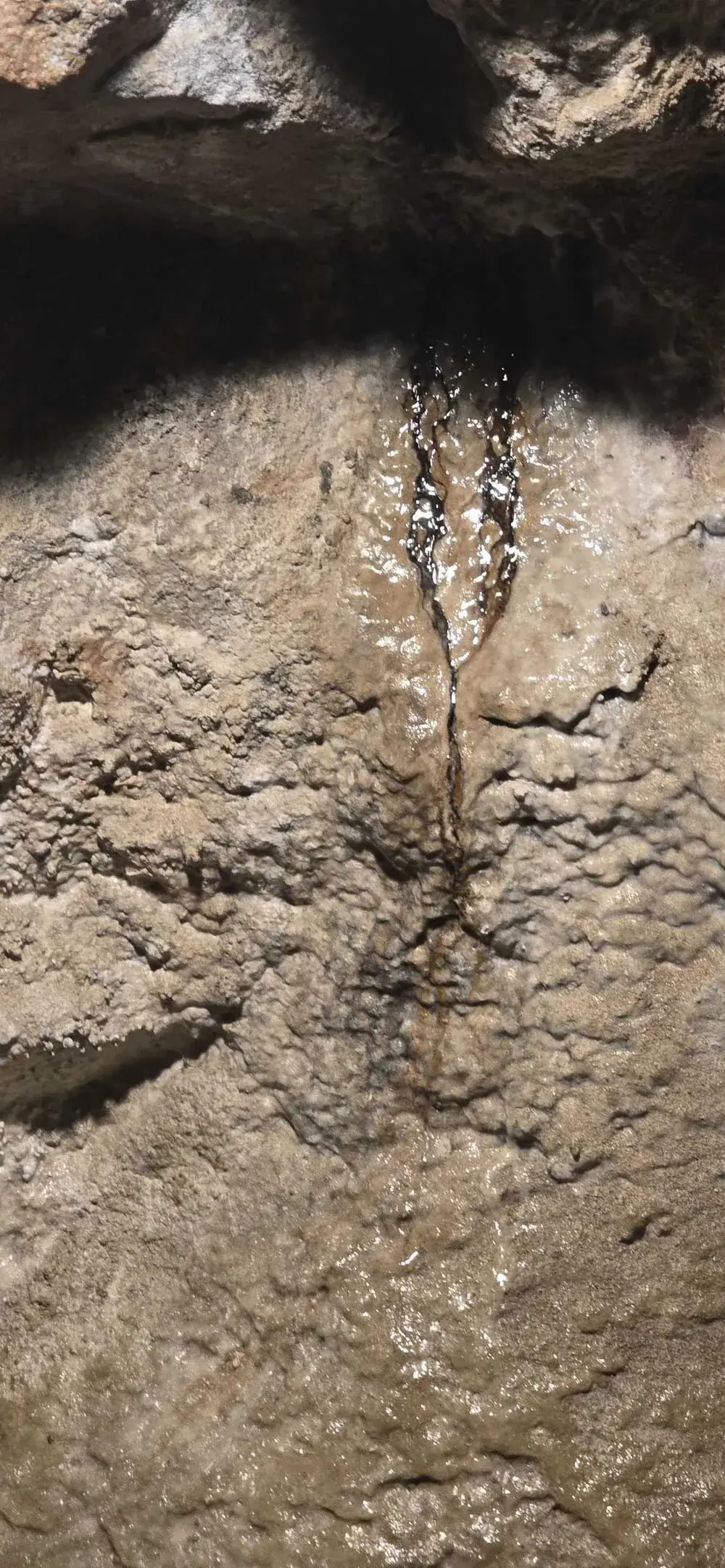
The guide stopped us in front of a section of wall where something dark and slick was oozing through the rock. It looked like someone had poured motor oil down the face of the stone. He called it dragon's blood.
Here's what's actually happening: when a silver vein is exposed to oxygen and water underground, the silver oxidizes, the same black tarnish you scrub off old silverware. That oxide dissolves into a sludgy liquid that seeps through cracks in the rock, sometimes for decades.
The Cornish miners who worked these tunnels had a different explanation. A dragon was guarding its treasure. The blood meant the beast was close, which meant the silver was close. Follow the blood, drill into the wall behind it, and you'd find the vein.
They weren't wrong about the practical part. Dragon's blood reliably marked a fat silver deposit. If this seepage had been visible during active mining, there'd be a drift — a horizontal blast tunnel — punched straight through the rock behind it. The fact that it's untouched means it formed sometime after 1896, when the mine was sealed with dynamite, and 1976, when Navy Seabees cleared it for public tours.
The Widowmaker
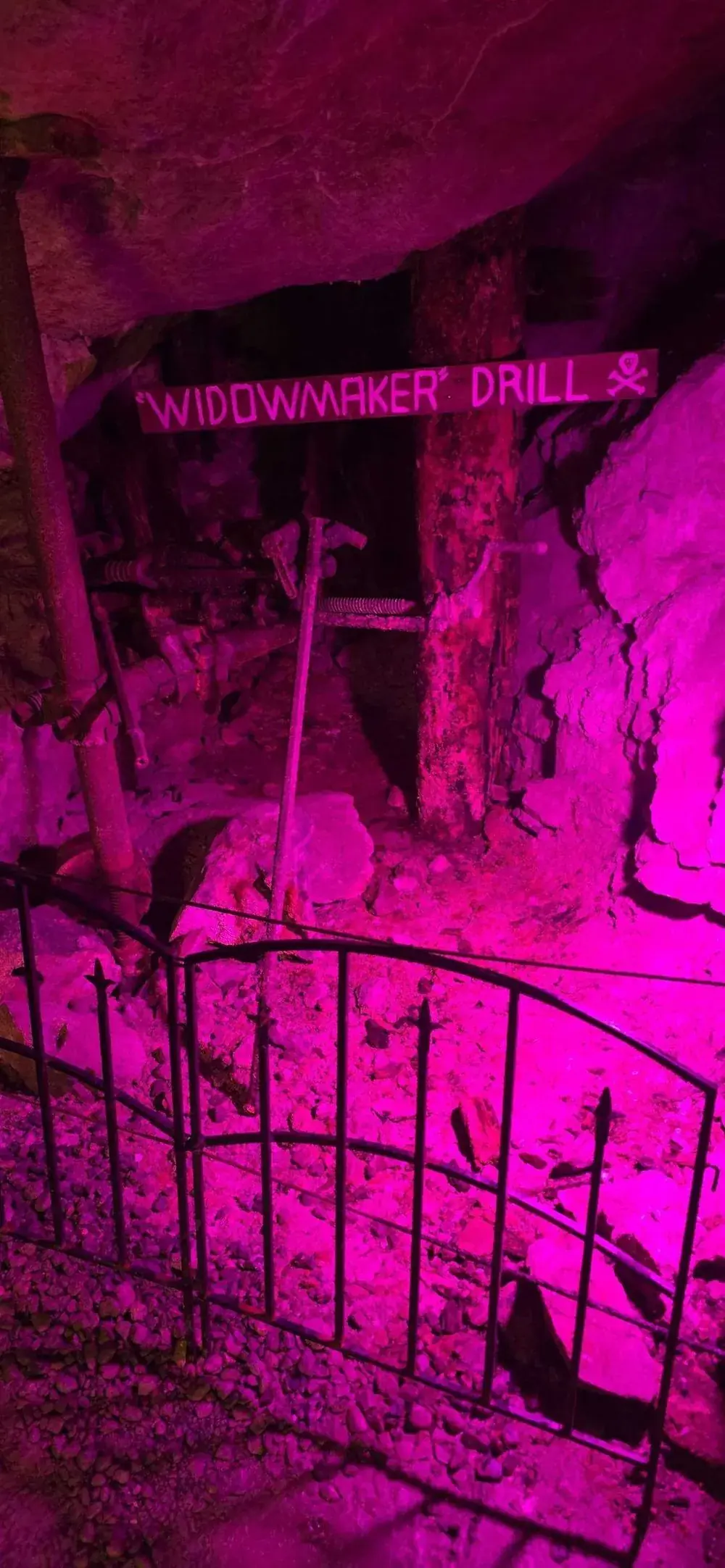
Before pneumatic drills, two men worked together. One held a steel bit against the rock. The other swung an eight-pound hammer, striking the bit fifty times a minute. They called it double-jacking, and the man holding the bit trusted his partner with his hands and his life.
When compressed-air drills arrived, one miner could do the work of two. Production soared. But the drills kicked up clouds of silica dust, microscopic glass particles that filled the tunnel air. Miners breathed it in shift after shift, and the silicon dioxide shredded their lungs from the inside. Within a year or two, a miner would be "rocked up" — too sick to swing a hammer, too winded to walk the tunnel. Most were dead within six months after that.
The drill earned a name: the Widowmaker. The skull and crossbones on the sign in the Lebanon Mine isn't decoration.
The fix came later — someone bored a hole through the center of the drill bit and pumped water through it, turning the killing dust into mud. Messy, but it kept miners alive long enough to collect their pay.
Feeding the Tommyknockers
Deep enough into any mine, the timbers start talking. Old support beams creak and groan under the weight of the mountain above them. Rock shifts. Things knock.
The Cornish miners, the Cousin Jacks who came from the tin mines of Cornwall, England, and formed the backbone of Georgetown's workforce — knew exactly what made those sounds. Tommyknockers.
About two feet tall, oversized heads, white whiskers, dressed in miniature miner's gear. They lived inside the mountain. They stole your tools, blew out your candle, hid your lunch pail. But they also knocked on the walls — sometimes to warn you of a cave-in, sometimes to lead you to an ore vein nobody had found yet. The trick was keeping them happy.
Every miner carried a Cornish pasty into the tunnel, a hand-held meat pie, crimped along one edge so you could hold it with dirty hands and not poison yourself. When you finished eating, you left the last bite tucked into a crack in the wall. That was for the Tommyknockers. Skip the offering, and you were on your own when the ceiling started groaning.
This wasn't casual superstition. Cousin Jacks refused to enter new mines until management confirmed the Tommyknockers were already inside. Non-Cornish miners, skeptical at first, tended to come around after enough time in the dark. The timbers really do creak. At 9,000 feet, a quarter mile into solid rock, it's easy to understand why someone would rather attribute the sounds to mischievous gnomes than to an imminent collapse.
When a large mine sealed its entrance in 1956, former miners circulated a petition demanding the owners unseal it — not to save equipment or recover ore, but to free the Tommyknockers so they could move on to other mines. The owners opened the seal and let them go.
The Magazine, the Snot, and the Stope
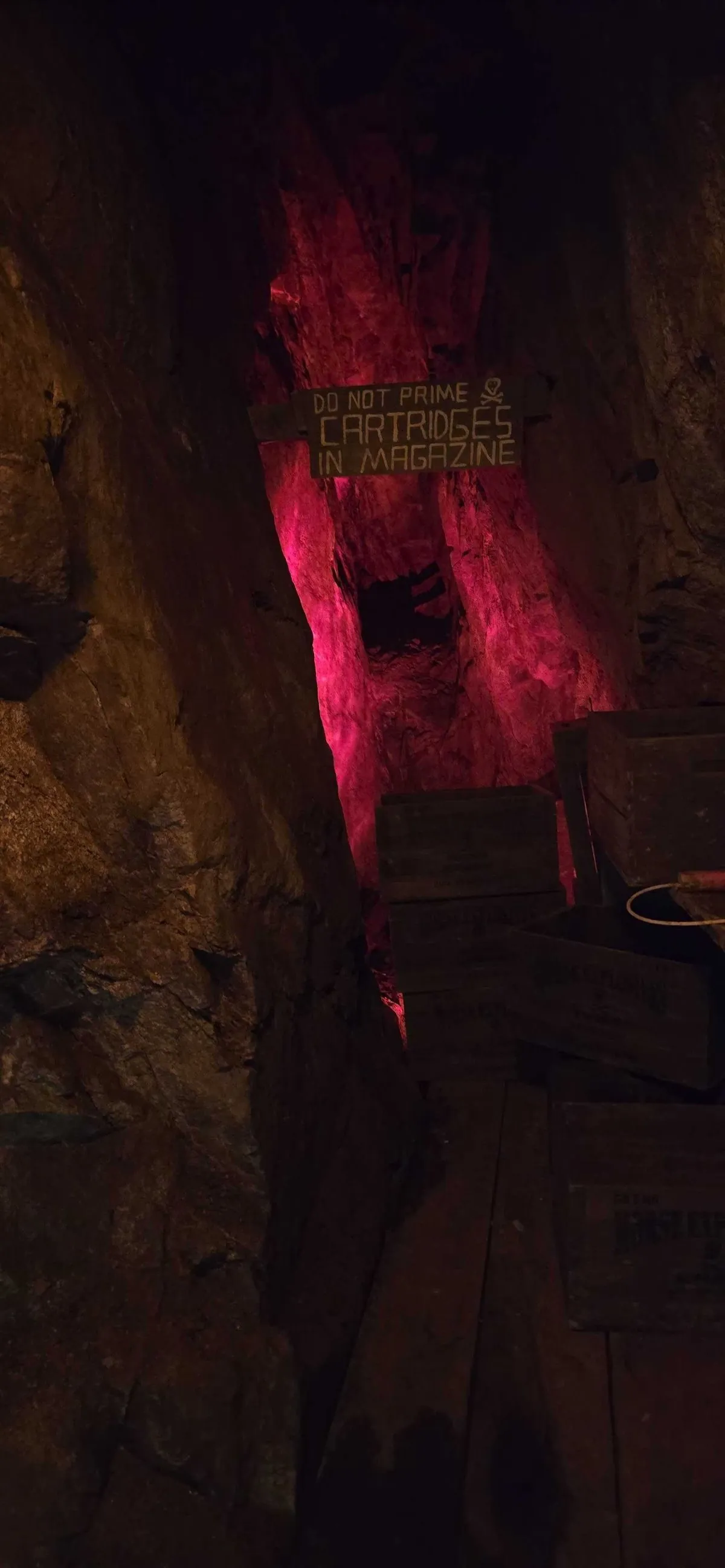
Deeper in, the guide pointed up at a sign: "DO NOT PRIME CARTRIDGES IN MAGAZINE." Skull and crossbones. Crates stacked below. This was the dynamite magazine, the room where blasting charges were stored. Priming a cartridge means inserting the detonator. Do that in a room full of other explosives, and everyone in the tunnel dies. The sign exists because someone tried it.
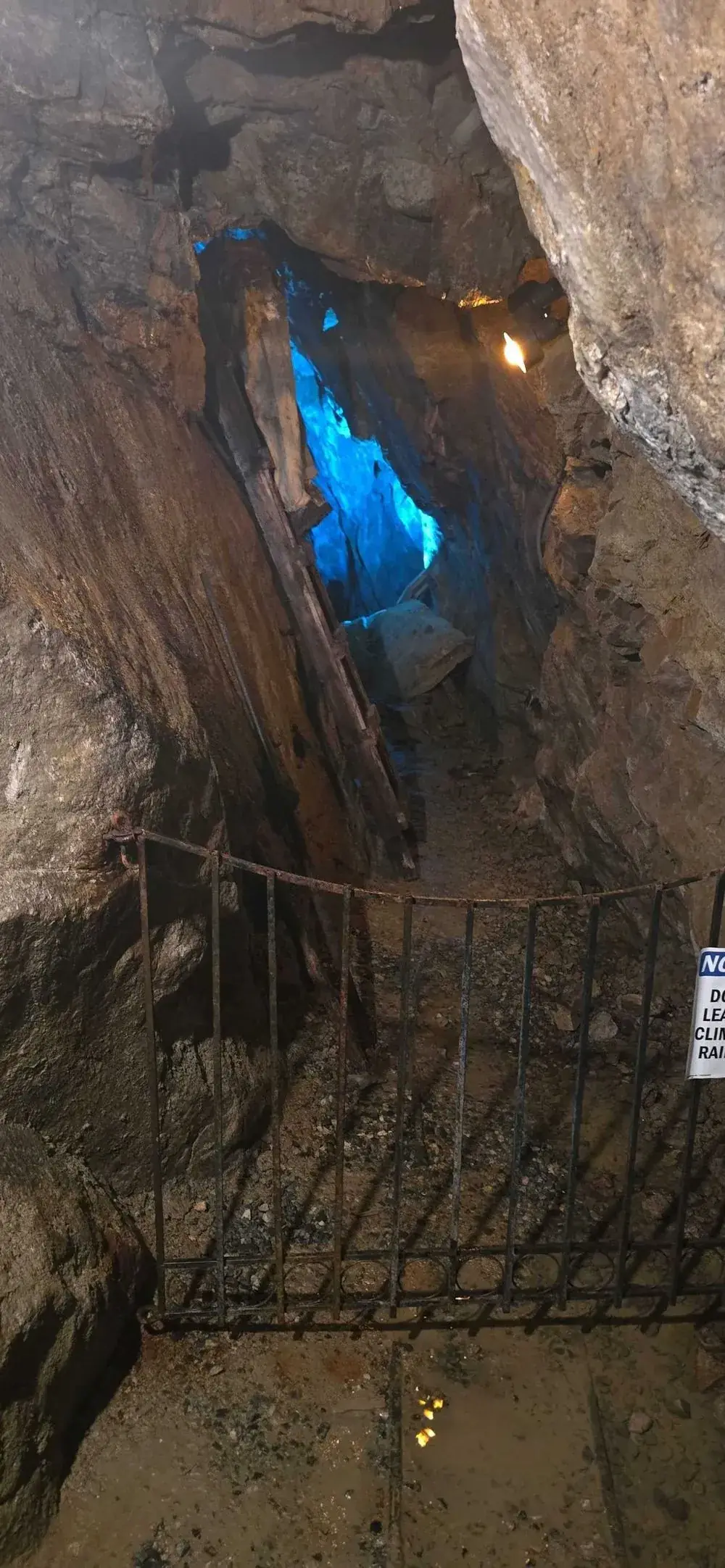
On the walls and ceilings where mineral-rich water seeps through rock, you'll spot pale, jelly-like growths. The miners called it mine snot. Scientists call them snottites—bacterial biofilms that feed on sulfur dissolved in the water. In some mines they're intensely acidic, pH near zero. Either way, they're proof that even in total darkness, at 44 degrees, inside solid rock, something finds a way to live.
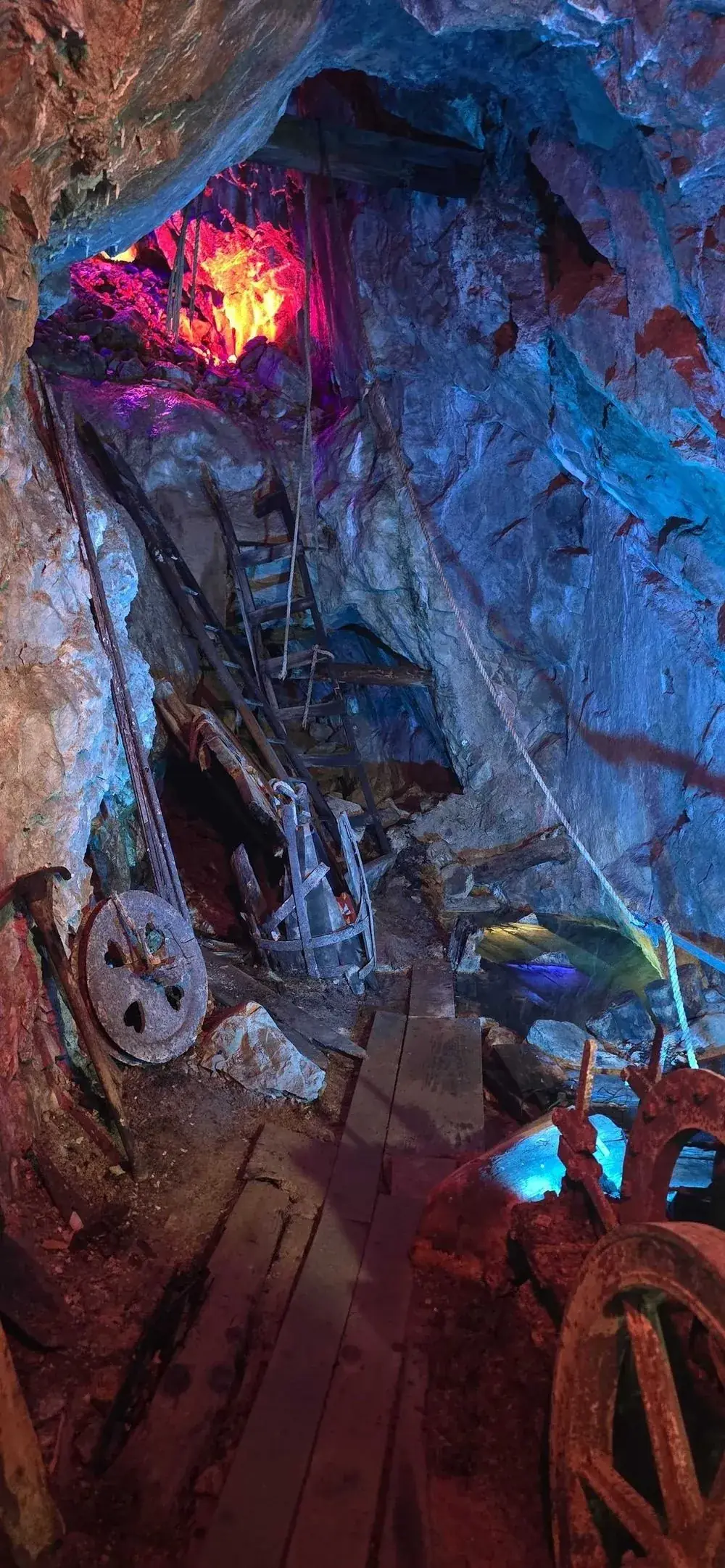
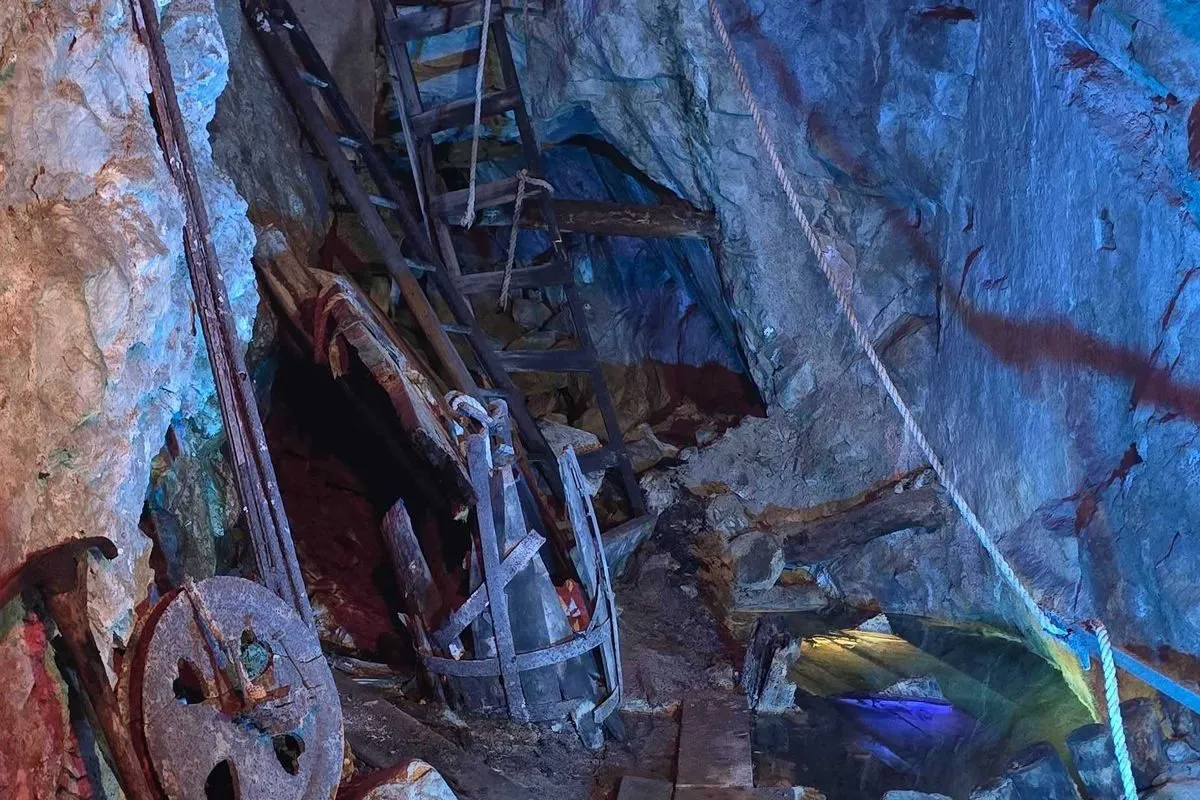
The tunnels are access routes. The real extraction happened in the stopes — vertical chambers carved upward to chase the ore wherever it went. Looking into one is disorienting. Old ladders lean against rock at steep angles. Hoisting pulleys, cables, rusted iron wheels — all of it sitting where miners left it when the silver market collapsed in 1893 and Georgetown emptied out.
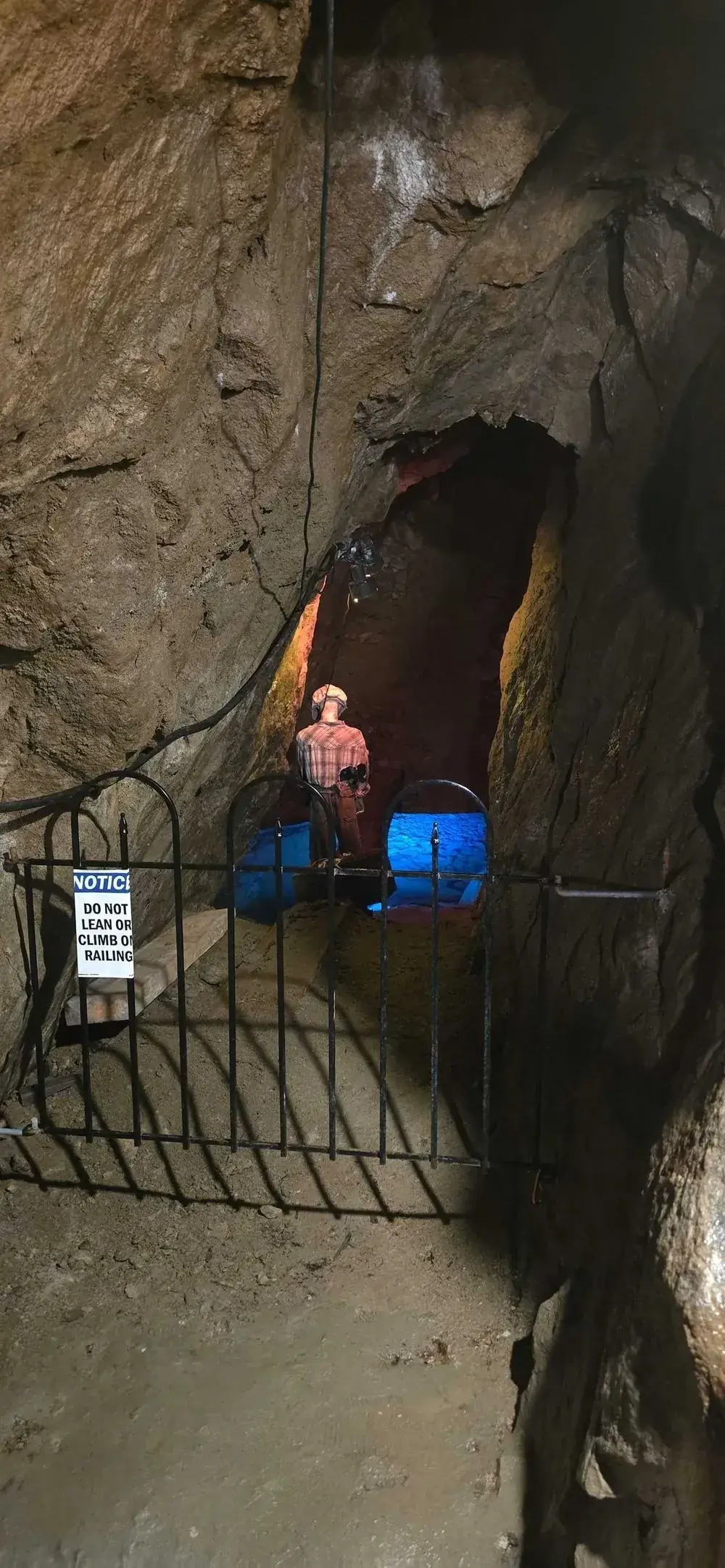
Partway through, you pass a mannequin dressed in a plaid work shirt, positioned near one of the shafts. It represents the average Georgetown miner, ten-hour shifts, three dollars a day, near-total darkness, breathing dust that would likely kill him before 40. No insurance. No pension. When a man died underground, his family got nothing but an opening on the crew for the next Cousin Jack off the boat.
Getting There (and Getting Back)
Georgetown is 45 miles west of Denver on I-70. Exit 228 for the Georgetown depot, Exit 226 for Silver Plume. About 50 minutes in normal traffic — longer on summer weekends when the I-70 corridor backs up through Idaho Springs.
Book early. Mine tours fill up fast, especially in summer. Reserve at georgetownlooprr.com. Take the extended tour if you can, 1,000 feet in, past the silver pearls, the calcified boot prints from the 1870s, and the oldest formations. Don't book the last train of the day — mine tours aren't offered on the final departure.
Wear closed-toe shoes. You'll be walking through standing water on uneven rock. Bring a jacket. It's 44°F inside the mine year-round. Drink water. The mine entrance sits at roughly 9,000 feet.
Or skip the I-70 traffic entirely. We run private day trips from Denver to Georgetown — pickup at your door, drop-off at the depot, pickup when you're done. No parking, no white-knuckling the mountain switchbacks, no arguing about who's the designated driver if you stop at Guanella Pass Brewery on the way back. We can combine Georgetown with Idaho Springs, Loveland Pass, or a loop through Guanella Pass when the aspens are turning.
Book a Georgetown Day Trip
Private transportation from Denver to the Georgetown Loop Railroad and Lebanon Mine.
Request a Trip Planor call/text 970-703-4995
Frequently Asked Questions
How long does the Georgetown Loop Railroad train ride take?
The round-trip between Georgetown and Silver Plume takes about 1 hour 15 minutes. Add the Lebanon Mine tour and plan for roughly 2.5 hours total. The extended mine tour goes over 1,000 feet into Leavenworth Mountain and adds more time. Book the earliest departure if you want to do both.
What is dragon's blood in the Lebanon Mine?
Dragon's blood is a dark seepage that forms when silver oxidizes underground. The silver oxide dissolves into water and oozes through rock cracks as a sludgy, near-black liquid. Cornish miners named it because they believed a dragon was guarding treasure nearby. In practice, it reliably marked where a fat silver vein was hiding behind the wall.
What are Tommyknockers?
Small spirits from Cornish mining folklore, brought to Colorado during the silver rush. About two feet tall with oversized heads and white whiskers. They knocked on mine walls — sometimes warning of cave-ins, sometimes pointing to ore. Miners left the last bite of their Cornish pasty as an offering. When a mine sealed its entrance in 1956, former miners petitioned to unseal it so the Tommyknockers could leave.
Why was the pneumatic drill called the Widowmaker?
It blasted silica dust into the air. The microscopic glass particles scarred miners' lungs, causing silicosis. After a year or two on the Widowmaker, a miner would be "rocked up", too sick to work. Most died within six months. The fix: a hole drilled through the center of the bit, pumping water through to turn dust into mud.
What is mine snot?
Jelly-like biofilms made of sulfur-cycling bacteria, hanging from mine ceilings and walls. They form where mineral-rich water seeps through rock. In some mines they're extremely acidic (pH 0–2). The Lebanon Mine has various bacterial and mineral formations the guides point out along the tunnel walls.
How far is Georgetown from Denver?
45 miles west on I-70, about 50 minutes in normal traffic. Georgetown sits at 8,530 feet elevation. Take Exit 228 for the Georgetown depot or Exit 226 for Silver Plume.
What should I wear to the mine tour?
Closed-toe shoes, mandatory, no exceptions. Bring a jacket regardless of outside temperature — the mine is 44°F year-round. You'll walk through standing water, so wear shoes you don't mind getting wet. Hard hats are provided.
Can young children do the mine tour?
Children under 5 are not permitted inside the mines — state safety regulation. Kids 5 and older must be accompanied by an adult. Strollers and wheelchairs cannot access the mine. If your kid can walk three-quarters of a mile through dark, enclosed spaces on their own, they'll probably love it.
When is the Georgetown Loop Railroad & the Lebanon Mine open?
Year-round with seasonal schedules. Mine tours run April through mid-September only, and aren't offered on the last departure of the day. Book an earlier slot if the mine is your priority.
What is the Devil's Gate High Bridge?
A 300-foot trestle standing 95 feet above Clear Creek — the engineering centerpiece of the Loop. The original was completed in 1884 (after being installed backwards and rebuilt), dismantled for scrap in 1939, and reconstructed in the 1980s to match the original design.
How long does the Georgetown Loop Railroad & the Lebanon Mine train ride take?
The round-trip train ride between Georgetown and Silver Plume takes about 1 hour and 15 minutes. Add the Lebanon Mine tour and plan roughly 2.5 hours total. The extended mine tour goes over 1,000 feet into Leavenworth Mountain and adds more time.
What are Tommyknockers in Colorado mining folklore?
Tommyknockers are small spirits from Cornish mining folklore brought to Colorado during the silver rush. About two feet tall with oversized heads, they supposedly knocked on mine walls to warn of cave-ins or lead miners to ore. Miners left them the last bite of their Cornish pasty as an offering.
What is mine snot or snottite?
Snottites are jelly-like biofilms made of sulfur-cycling bacteria that hang from mine ceilings and walls. They form where mineral-rich water seeps through rock. In some mines they are extremely acidic (pH 0-2).
What should I wear to the Lebanon Mine tour?
Closed-toe shoes are mandatory. Bring a jacket — the mine holds at 44°F year-round. You'll walk through standing water, so wear shoes you don't mind getting wet. Hard hats are provided on site.
About the Author
Jim Becker is Director of Operations and Client Experiences at Arion, LLC, a women-owned luxury ground transportation company serving Denver and the Rocky Mountain region. He handles routing, timing, logistics, safety planning, and guest experience for private transportation across Colorado's Front Range and mountain corridors — including day trips to Georgetown, Idaho Springs, and the I-70 mountain towns.


